
Friends,
The war with Iran arrived in Winchester, Kentucky, this morning.
First, a little background: Industrial agriculture has two lifelines, synthetic fertilizer and diesel fuel. At Mt. Folly, we have spent years building our soil fertility naturally, with cover crops, green manures, cattle and compost. But our tractors run on diesel, and until I can build a neighborhood soybean-fueled biodiesel plant, we’ve got to have it.
Our supplier is Ashland Oil’s Bulk Plant on North Main Street. This morning, Miss B, who doesn’t miss a thing and knows all the farmers and their crews, told me that as of Monday, all of us are on half rations, and if you call her for diesel, and your farm tank isn’t empty, she’ll take you off the list.
While there is no official rationing yet, fuel at the terminals is limited, and the shortage is trickling down to farmers and small trucking companies. Everyone is paying more at the pump.
The proximate cause is passage of oil tankers through the Straits of Hormuz, a narrow 20-mile choke point with Iran to the north and Oman to the south, through which roughly 20% of global oil must travel.
The upcoming fertilizer shortage and price spike has a related cause. Most of the world’s nitrogen fertilizer is made with the HaberBosch process, an industrial process which turns natural gas into nitrogen fertilizer. So a liquid natural gas squeeze overseas quickly shows up as higher nitrogen prices at Southern States and nervous farmers at home.
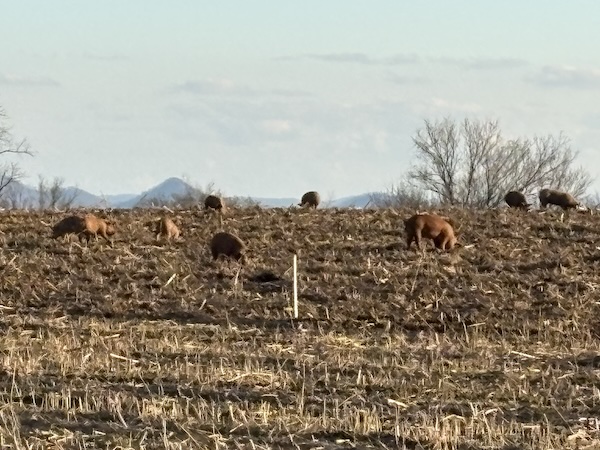
Seeking to be free from fossil fuels, Mt. Folly started growing and composting its own fertilizer years ago. Here are some pictures I took this morning:
-
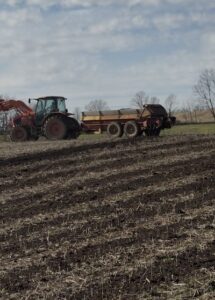
- Mt Folly Farm Compost
-
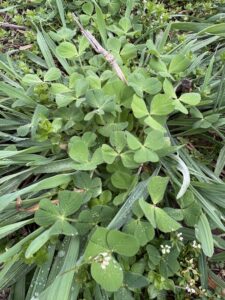
- Crimson Clover Fixing Nitrogen
-
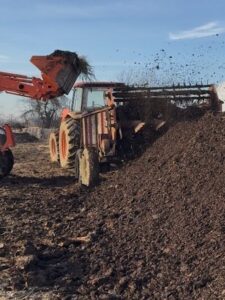
- Approximately 100 tons of compost
-
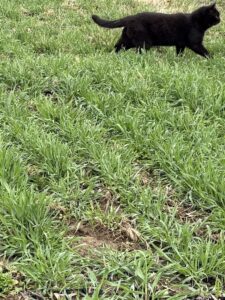
- Cat walking across rye cover
So we are mostly “safe” from the fertilizer shortage, but need our diesel. Several years ago, I toured a small plant in Ohio making diesel out of soybeans. I need a working partner to do this, but after the Covid supply chain collapse and now this, I may be ready.
Laura